


Alarm goes off. Grab phone. Scroll for ten minutes, still half asleep. Panic about the time. Rush through getting ready while mentally replaying every stressful thing on the calendar that day, none of which has even happened yet. That was my morning routine for years. By the time I actually left the house, I’d usually already had a small anxiety spiral before 8am over nothing real.
Quick thing before any of this: I’m not a therapist. This isn’t treatment for actual clinical anxiety, and if what you’re dealing with is bigger than everyday stress — panic attacks, something affecting your ability to function — please talk to an actual professional. What follows helped my garden-variety morning stress. It’s not a replacement for real support if you need more than that.
The Driveway Thing
There was one Tuesday. Nothing had gone wrong yet; that’s the whole point. I was sitting in my car in the driveway, heart pounding, dreading a day that hadn’t started. Hadn’t even gotten to work yet, and I was already exhausted from anticipating it. That gap — nothing’s happened, I’m already anxious — is what finally got my attention.
Mentioned it to my therapist, who I was already seeing for unrelated work stuff. She asked about my mornings specifically. I described the phone thing, the rushing. She pointed out, fairly gently, that I was starting my morning routine every day already behind, already stressed, before any actual stressor had shown up. That reframe stuck harder than I expected from one offhand sentence.
I Didn’t Do This All At Once
Changed one thing, let it sit for a couple of weeks, added the next. Trying everything simultaneously has failed me before, badly, so I didn’t repeat that mistake here.
Phone charger moved out of the bedroom first. Kitchen now. Physically can’t reach for it half-asleep anymore. Bought an ugly little alarm clock specifically so I’d have an excuse not to need the phone at all. First week was rough — genuine phantom urge to check something, anything, the second I woke up, nothing there to check. Faded within maybe ten days. After that, mornings without scrolling just felt normal.
Morning Routine: Started waking up twenty minutes earlier too. Sounds small. Felt small in terms of lost sleep. But having a buffer where I wasn’t sprinting through every task lowered something baseline about the whole morning, separate from anything else I changed.
The Sitting Thing, Which I Resisted Hard
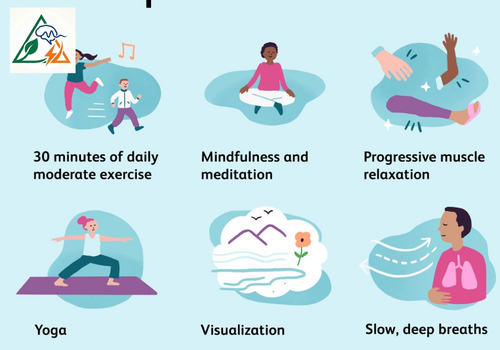
My therapist suggested some kind of brief mindfulness practice, and I fought this one the longest — felt performative, the kind of thing I’d roll my eyes at from a wellness account. Tried it anyway eventually. Five minutes, sitting, breathing, no app, no guided anything.
Felt ridiculous the first several times. Spent most of it thinking about my to-do list instead of whatever I was supposed to be doing. Around week three, something shifted — not anxiety gone exactly, more like starting the day from a slightly lower baseline instead of already elevated.
A Notebook, Mostly Illegible
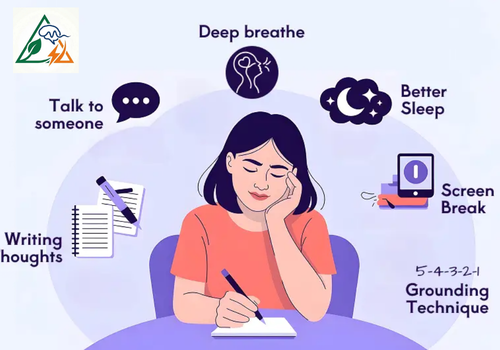
Writing in a notebook mattered more than I expected going in. Just a notebook, no structure, writing whatever anxious loop was present that morning — messy, unfiltered, sometimes just a list of things I was dreading. Not journaling in the pretty reflective sense. More like dumping noise out of my head so it stopped circling. According to Harvard Health, expressive writing appears to “offload” worrisome thoughts, freeing up mental resources that would otherwise stay tied up in worry.
Helped most on mornings routine I woke up already anxious about something specific — a meeting, a hard conversation coming up. Didn’t make the thing less stressful. Made it feel more like a defined problem instead of a vague cloud following me around. There’s a presentation-day morning I still think about — woke up already spiraling, worst-case scenarios on repeat before coffee even happened. Wrote it all out, half-legible, no editing myself. Read it back after, and it looked almost silly on paper, spelled out plainly instead of looping. Presentation was still genuinely nerve-wracking. But the spiral felt finite, contained to half a page, instead of endless fog. Don’t fully understand why that works. Just that it consistently did.
Morning Routine: Started eating actual breakfast around this same stretch too, for unrelated reasons, and noticed my mornings felt less shaky and irritable once I wasn’t running on just coffee. Can’t fully separate this from everything else. Worth mentioning anyway — skipping breakfast had been contributing to a jittery, on-edge feeling I’d been blaming entirely on anxiety.
And a short walk most mornings was routine. Sometimes just standing outside with coffee for a few minutes. Not a workout. Became one of the pieces I resisted skipping even on rushed days, because the days I skipped it felt noticeably more tense than the days I didn’t.
The Two Weeks I Threw It All Away
Five weeks in, roughly, a genuinely stressful work project hit, the kind that follows you into sleep. Found myself reaching for the phone again first thing, scrolling work email before getting out of bed, undoing the very first change I’d made. Told myself it was temporary, just this one deadline. Temporary stretched into almost two weeks.
What snapped me out of it wasn’t some realization. Just noticing I felt exactly like I used to — that pre-anxious, already-behind feeling — and connecting it directly to the phone. Moved the charger back to the kitchen. Felt a little embarrassed, honestly, that one stressful project unwound weeks of a habit I’d assumed was solid. Apparently it wasn’t. Useful, if humbling, thing to learn about myself. Looking for a healthier screen routine? Explore simple digital detox strategies that can support mental well-being.
Weekends Just Didn’t Match, and I Stopped Caring
My weekday routine and weekend morning routine never lined up, and for a while that bothered me, like I was cheating on my own system by sleeping in and skipping the notebook on Saturdays. Let that guilt go eventually. Weekdays had actual structure to buffer against — meetings, commute, a specific anticipatory dread. Weekends’ morning routine didn’t carry the same pressure, so looser, sometimes nothing formal at all, just felt fine.
Trying to apply the exact same rigid system every single day regardless of context is probably part of why past attempts at “better habits” failed for me. Weekdays structured, weekends loose, made the whole thing sustainable instead of one more obligation.
What This Actually Required
Almost nothing, cost-wise, which was a relief given how much other stuff in my life had quietly become a grocery-budget line item. Alarm clock, maybe fifteen dollars. Notebook was already sitting unused in a drawer. No app subscriptions, no class to sign up for. The real cost was time — twenty earlier minutes meant going to bed slightly earlier too, its own adjustment since I’m historically bad at winding down at a reasonable hour.
Bought a nicer notebook a few months in, purely because I’d started actually using the cheap one daily and wanted something that felt a little less like a random scrap grabbed out of a drawer. Small, unnecessary upgrade. Made the habit feel more intentional somehow anyway.
My Husband, and Then My Daughter
He mentioned, a couple of months in, that I seemed less “wound up” in the mornings — his phrase. Said I used to snap at small things, a spilled coffee, a missing sock — in a way that felt disproportionate, and that had noticeably softened. Hadn’t tracked that pattern myself. Too close to my own experience.
My daughter, seven, noticed the notebook pretty fast and asked what it was for. Told her, roughly, it’s where I write down worries so they’re not stuck in my head all day. She thought about that for a second and asked if she could have her own. Caught me off guard. Bought her one that weekend. Uses it inconsistently, the way kids use most things, but I’ll catch her scribbling in it before school sometimes, and something about that felt like a good, unplanned outcome of a routine I’d started purely for myself.
A Thing About Sundays Specifically
Sunday nights used to wreck the following morning before it even started. That specific dread, the whole “back to it tomorrow” feeling, sitting heavy from around 6pm onward. Didn’t connect this to my morning routine work at first — figured it was a separate problem, unrelated.
Turns out it wasn’t unrelated at all. Once the writing-down thing became a real habit, I started doing a loose version of it Sunday evening too, not part of the original plan, just something that happened naturally once I’d built the muscle for it on weekday mornings. Writing out whatever was already looping about Monday, Tuesday, the week ahead. Didn’t eliminate the Sunday dread. Took some of the edge off it, enough that Monday mornings stopped feeling like they were starting from a deficit before Sunday night had even finished doing its damage.
Coffee, Which I Didn’t Expect To Matter Here
Small thing, but worth mentioning. Used to drink coffee standing up, rushing, usually the second or third cup by the time I left the house, caffeine stacked on top of an already anxious system. Started making myself sit down for the first cup specifically, even just five minutes at the kitchen table instead of the car or standing at the counter scrolling something.
Cut back to two cups total most days too, not because caffeine is inherently bad, just noticed a pattern where the third cup seemed to nudge me from alert into jittery, and jittery on top of an anxious morning is not a combination I need more of. This wasn’t a dramatic health overhaul, just noticing what was actually happening and adjusting slightly.
The Time I Told a Coworker About the Notebook Thing
Mentioned the notebook habit offhand to a coworker during a stressful week at the office, mostly just making conversation, not expecting much of a reaction. She got genuinely interested, asked a bunch of follow-up questions, said she’d been dealing with something similar — waking up already stressed about nothing specific — and started doing her own version a few days later.
We ended up checking in with each other about it occasionally, which I hadn’t expected and which turned into a small, unplanned kind of accountability. Nothing formal, just the occasional “how are the mornings going” during a coffee run. That social piece, completely accidental, ended up mattering more to my own consistency than I would have guessed going in. Having someone else who understood the specific thing I was trying to do made it easier to keep doing it on the weeks motivation was low.
What I Thought Would Help and Didn’t
Tried a guided meditation app for about a week, one of the popular ones, paid for the subscription and everything. Didn’t stick. Found the voice mildly irritating, if I’m honest, and having a screen involved at all first thing in the morning kind of defeated the point of getting away from screens in the first place. Cancelled after the free trial ended; went back to just sitting quietly on my own, no guidance, which worked better for reasons I can’t fully explain beyond it just fitting me personally.
Also tried journaling prompts for a bit, the kind with a specific question printed at the top of each page, gratitude-focused mostly. Felt forced, like homework, like I was performing positivity rather than actually processing anything. The unstructured, messy version, just writing whatever was actually there, worked better for me specifically. I don’t think this means prompts or guided apps are bad generally — plenty of people probably love them. Just wasn’t the right fit for how my own brain operates.
What I’d Actually Say To Someone Starting This
Don’t do everything at once. One change, given a couple of weeks, worked far better than the pile-it-all-on approach I tried and nearly abandoned within a week.
Expect the quiet stuff to feel the most ridiculous. The sitting practice felt most performative to me going in and ended up mattering the most. Didn’t see that coming.
Don’t treat a bad morning as proof the whole thing failed. Bad mornings still happen — see: two weeks of phone scrolling during a stressful project. What matters is coming back to it, not staying perfect. Explore the science behind magnesium and sleep to understand whether supplementation may actually help.
And again — if what you’re carrying is bigger than a routine can touch, talk to an actual professional. This helped with everyday stress. It isn’t a replacement for real support when something’s genuinely more serious.
FAQs
What morning habits actually help reduce anxiety? For me: phone out of reach first thing, a few minutes of quiet sitting, writing down looping thoughts. Made the biggest difference. Everyone’s triggers differ, though.
How long before a new morning routine helps with stress? Individual pieces felt meaningful within two to three weeks each. Full combined effect took closer to two months before it felt consistent rather than occasional.
Is meditation necessary for morning anxiety? I did an informal version — just sitting, no app, no structure — and that was enough for me. Can’t speak to whether a more formal practice would do more; never tried it.
Should I avoid checking my phone first thing? For me, yes, it made a real difference. Moving the charger out of my room is what actually made it stick — willpower alone hadn’t worked in past attempts.
What if I don’t have time for a long routine? Mine wasn’t long. Twenty earlier minutes, a few short pieces added gradually. Doesn’t require hours free, more a willingness to protect a small buffer instead of running on the last possible minute.
Can a morning routine replace therapy or medication? No. Want to be clear about that. This helped everyday stress specifically. If anxiety is significantly affecting your life, talk to an actual mental health professional.
What should I do if I miss a day? Pick it back up. I used to treat any disruption as proof the whole plan failed, and that mindset did more damage than the actual missed day ever did.
Does this work if my anxiety is triggered by work, not mornings themselves? Work stress was still there in my case — the routine didn’t remove the source. What it changed was the baseline I was starting from before work stress even entered the picture. Different from solving the actual stressor.
How do I stay consistent when life gets busy? I didn’t, not perfectly. Almost two weeks fully dropped during that work project. What mattered more than perfection was noticing the drift and coming back, not treating the lapse as permanent.
Do guided meditation apps work better than sitting quietly on my own? Didn’t for me. Tried one for about a week, found it more distracting than helpful having a screen involved at all first thing. Unguided sitting worked better for my specific brain, though I wouldn’t assume that’s universal.
Does talking to someone else about the routine actually help consistency? Accidentally, yes, in my case. Mentioning it to a coworker turned into a small, unplanned check-in system that kept me going on low-motivation weeks more than I expected from something I hadn’t set out to build.
Conclusion
Didn’t expect changing my mornings to matter this much. Felt like such a small thing next to whatever was actually stressing me out on any given day. But starting already anxious, before anything real had happened, turned out to be its own separate problem, distinct from the day’s actual stressors.
I’m not anxiety-free. No routine honestly promises that, and I’d be suspicious of anyone claiming theirs does. There are still mornings the old pattern creeps back, still stretches like that two-week phone relapse where the whole thing quietly falls apart before I notice. What changed is I’m not starting from behind anymore, most days, and when I do slip, I’ve stopped treating it like proof the whole approach was a failure.
That distinction — between never slipping and not spiraling when you do — mattered more than I expected from something this ordinary. If your mornings sound anything like mine used to, it might be worth picking one small thing, just one, and seeing what a couple of weeks of it actually does before deciding whether it’s worth the rest.
[…] stuff, except this time I extended it specifically to cover the evening too, not just mornings. Start your day with simple morning habits that can help reduce stress and support a calmer […]
[…] Months two and three: Settled into a consistent routine, stopped obsessively tracking every night, just took it and moved on with my evening. Want to start your mornings on a calmer note? Try these simple routine ideas to manage everyday stre… […]